Personal Blog · FRCR 2A
FRCR 2A:
my journey
through
the hardest
exam I've sat.
A quick note on the website name — I bought this when I was seriously considering building a question bank. By the time I passed, there were already so many brilliant ones out there that I couldn't see where I'd add value. So this became something different: an honest account of my approach, the resources I leaned on, and the things I wish I'd known from day one.
This is not a question bank. It's a journal. I hope something here helps you.
01. The Template
Download my PowerPoint and edit my personal revision deck.
02. The Anki Deck
Get the 4,000+ question bank found on Reddit.
04. The Final Mock
Save the Final FRCR: Self-Assessment for your final week.
05. Reddit Advice
The best Reddit posts for FRCR 2A: What r/RadiologyUK actually says.
Cut to the chase: what can you offer me for free?
Skip the philosophy and get straight to the template and resources.
Before you read on
This is a
questions-first
blog.
I want to be upfront about who this is for. Since medical school, I have always been a question-heavy learner. For me, doing a question — getting it wrong, understanding why, and moving on — is worth ten pages of passive reading. It's an active process. It keeps me engaged in a way that reading alone never has.
I'm also a slow reader. That's just the truth. Colleagues who absorbed Crack the Core cover to cover and retained it almost photographically — they passed too, and probably more efficiently in some ways. Their approach is completely valid. Reading is important, and I'm not dismissing it.
“Find the method that plays to your strengths. Neither approach is wrong. But know which one you are — and commit to it.”
This blog is probably for you if…
- You've always learned better by doing than by reading
- You don't mind being wrong — as long as you understand why afterwards
- Passive reading alone doesn't stick without active reinforcement
- You want volume: as many questions as possible
- You want an honest account, not a polished revision guide
If you prefer books…
You'll still find the resource list, the condition list, and the case examples genuinely useful. The philosophy sections may just read differently for you — take what helps and leave the rest.
My Approach
Think like
a photographer.
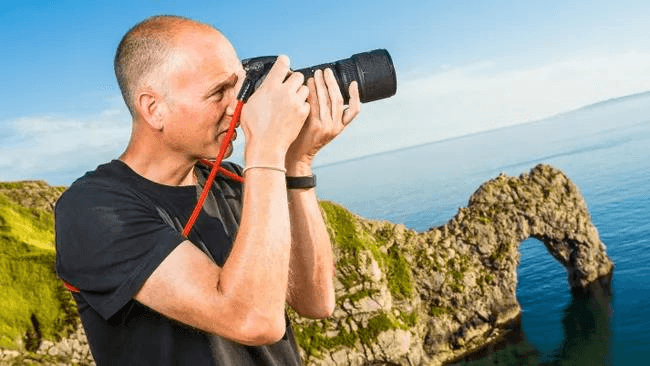
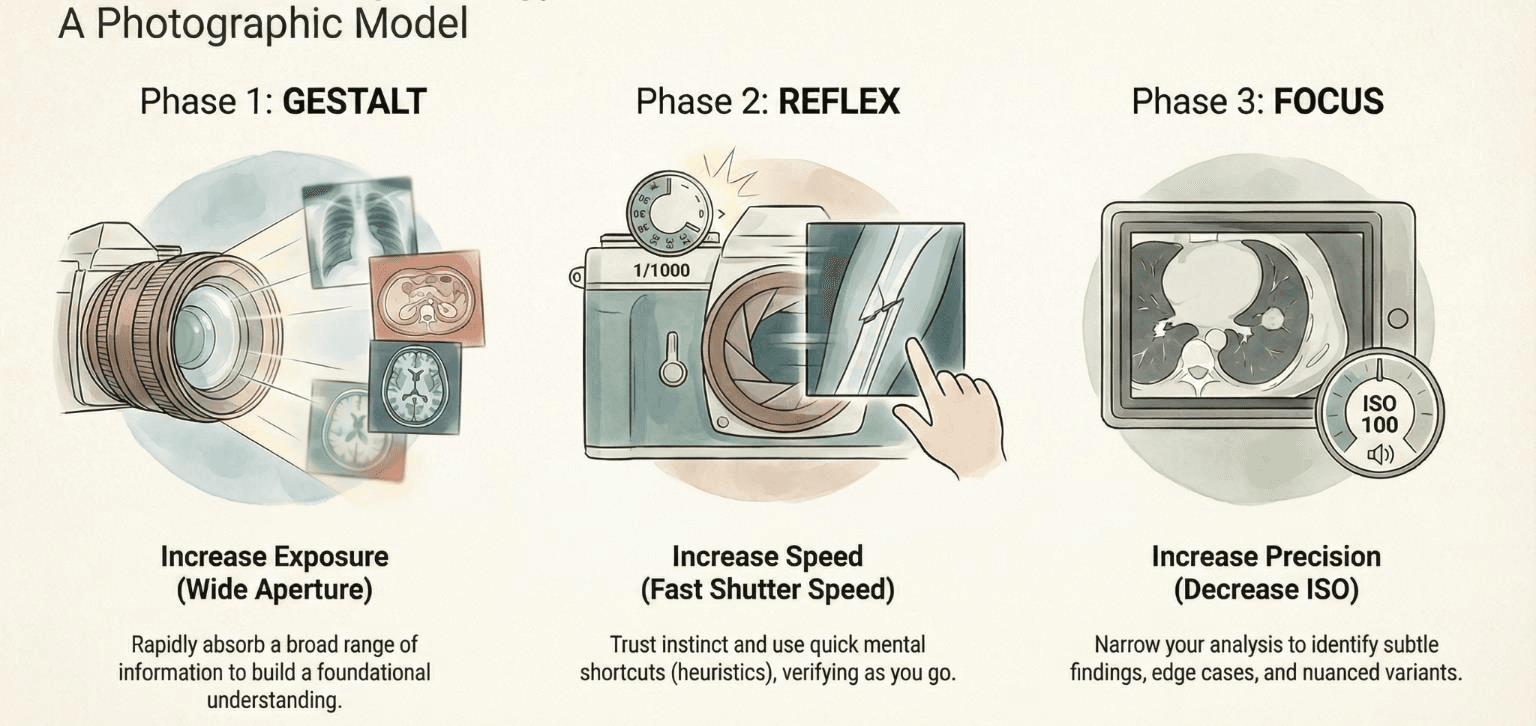
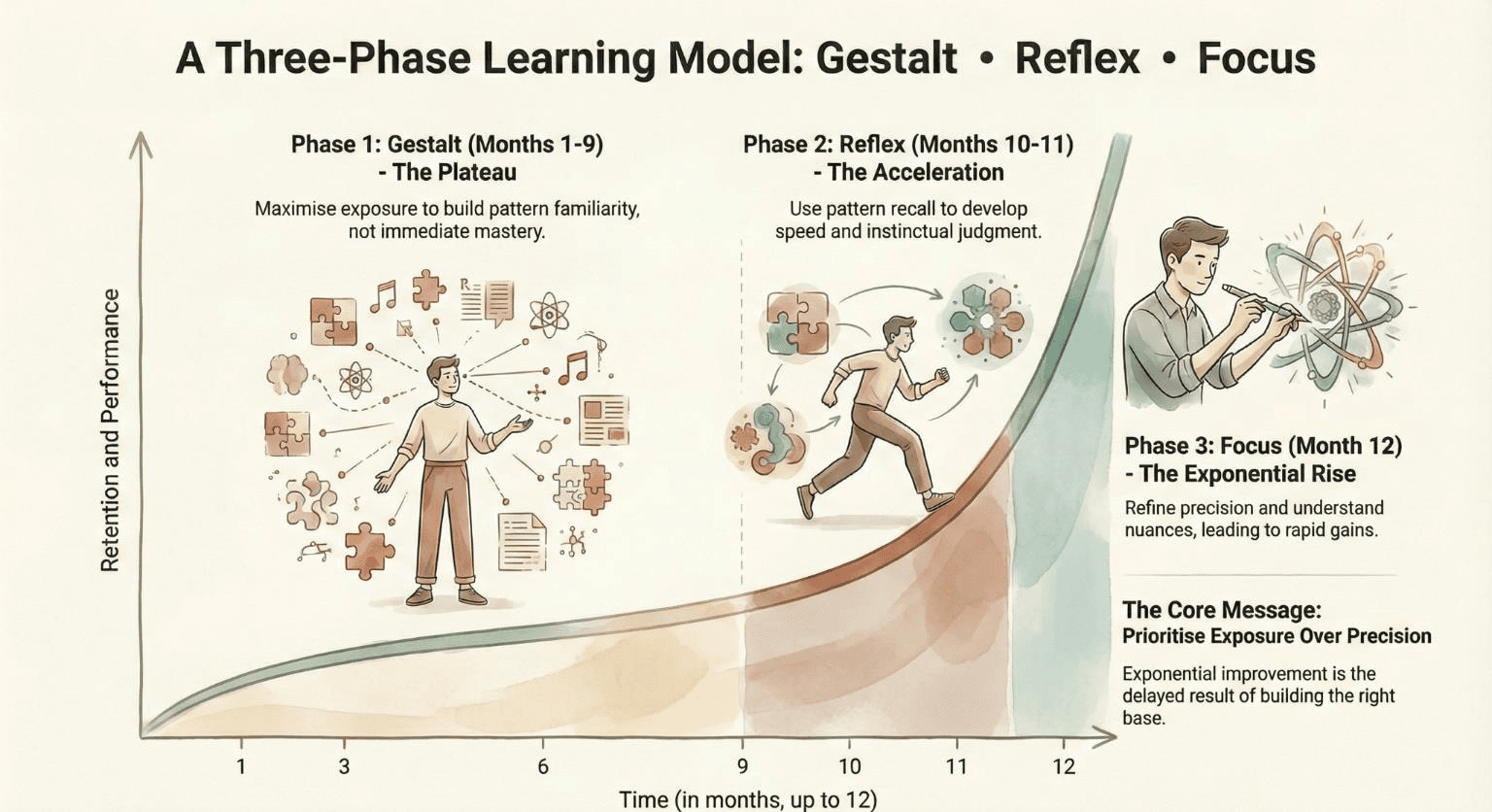
This is how I framed my revision — a three-phase model I stumbled on and stuck with. It worked for me because it focused on rhythm over rote.
Phase 1 · Months 1–9
Gestalt
Wide Aperture
I maximised exposure. Volume, not perfection. Broad, rapid absorption — I didn’t worry too much about every wrong answer at this stage.
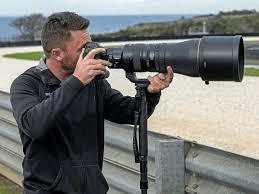
Phase 2 · Months 10–11
Reflex
Fast Shutter Speed
I started trusting my gut. Quick mental shortcuts, faster decisions. I tried to answer first, then verify — not deliberate over every question.
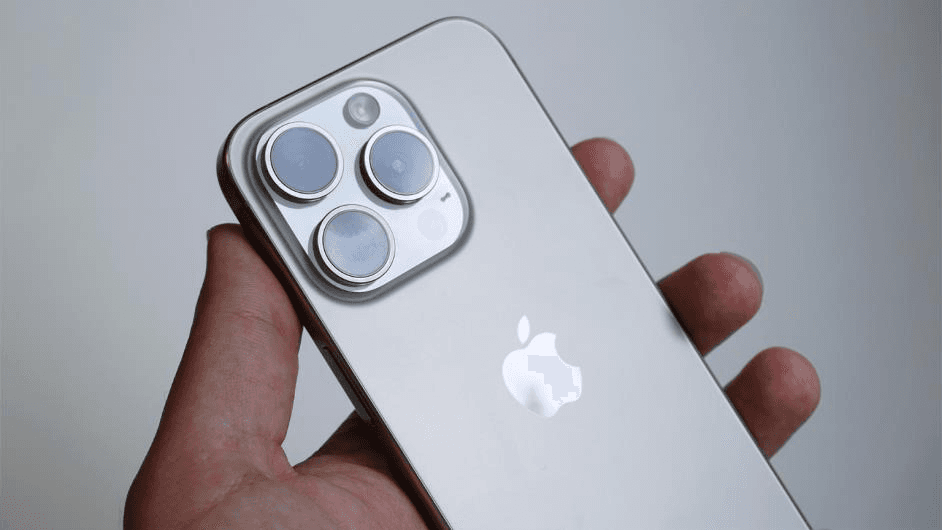
Phase 3 · Month 12
Focus
Decrease ISO
I narrowed my analysis. Subtle findings, edge cases, nuanced variants. This is where the precision work finally paid off.
The Framework
The mistake I made
for 9 months.
I focused on precision way too early. Looking back, most of those first nine months should have been broad exposure — volume, not depth. The exponential rise only came once I'd built that base.
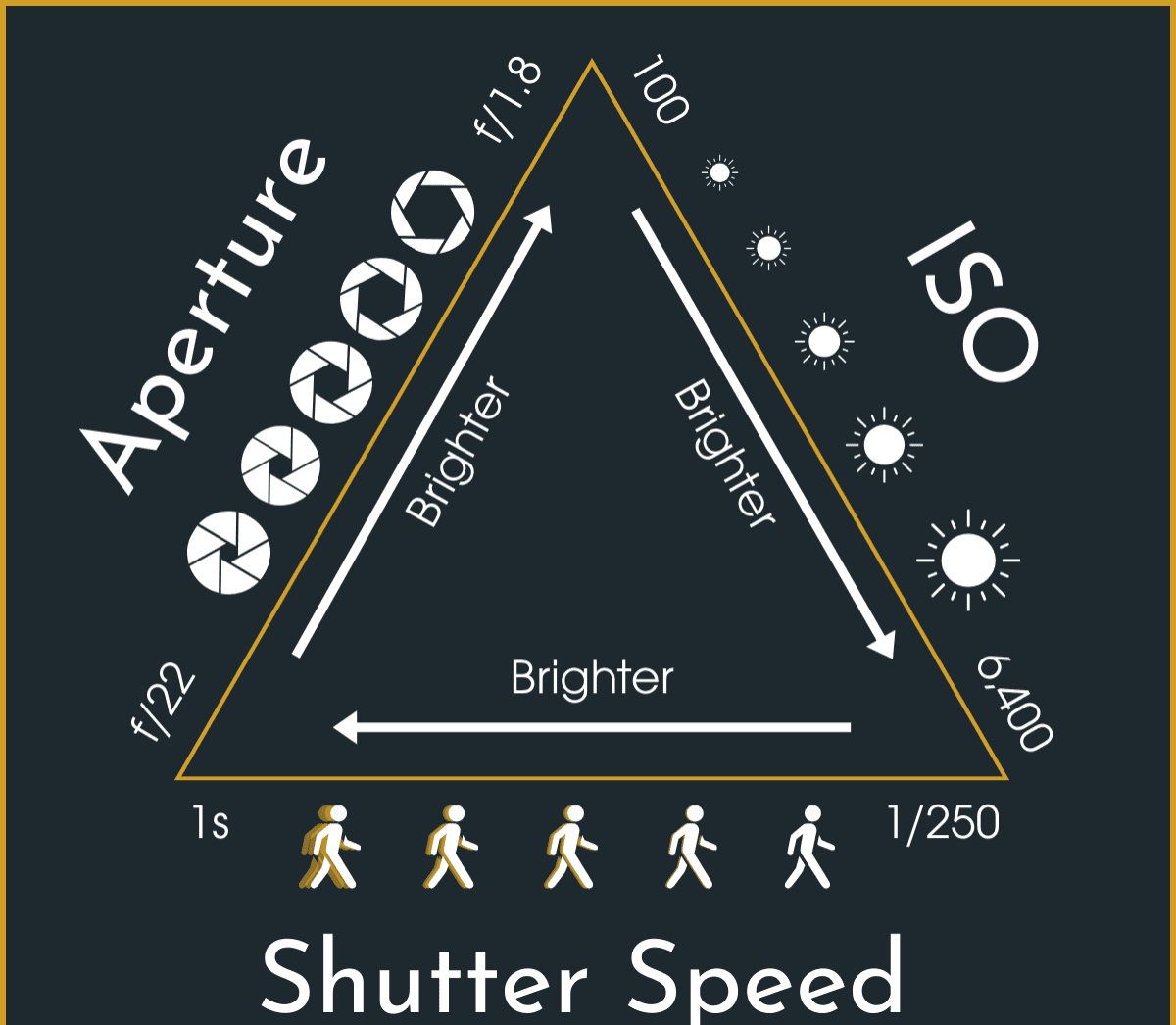
How I used the analogy
Key Insight
The exponential rise is a delayed result of building the right base. I wish I'd trusted that earlier and not rushed to precision.
The Blueprint
My study
note template.
I didn't just wing it. For every diagnosis I found in a question bank, I built a slide using this exact structure. It was my way of forcing organization onto a chaotic syllabus.
1. How I split my notes.
I divided my revision by system. The brackets show how many slides (or conditions) I had for each. It helped me visualize the mountain I had to climb.
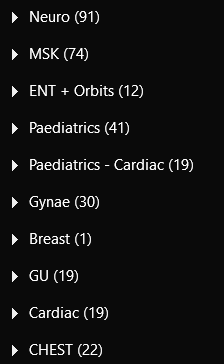
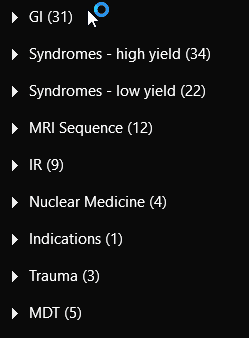
System splits · Slide counts
2. The 5-Point Rule.
Every single card I made followed this rule. If I couldn't find information for all five, I went looking for it. This is the framework that made the information stick.
Template vs. Execution
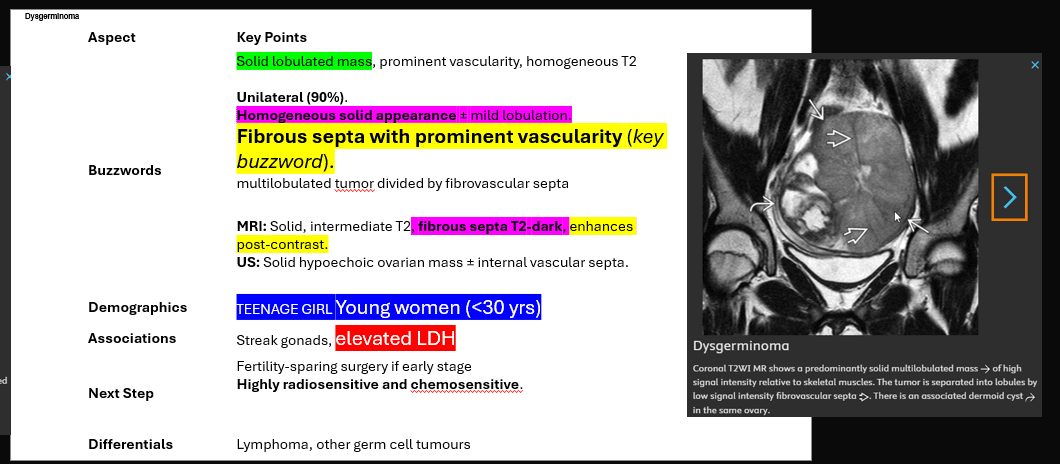
3. What a finished slide looks like.
This is a real capture from my final revision deck. One slide, one diagnosis, everything you need to know in a single glance. No fluff, just the high-yield facts that actually come up in the exam.
Want the full deck?
If you found this template useful and want the full PowerPoint deck for your own revision, I'm more than happy to share it.
The best way to grab it is to head over to the original Reddit thread and drop a comment. If you can, shoot me a quick direct message as well — that way I'll get a notification and can send the link straight over to you.
I check DMs daily
I Wish I'd Known This
I wish I had
this at the
start.
FRCR Exam Prep publishes a condition list broken down by system — essentially the syllabus as a checklist. I found it near the end and used it retrospectively. Turned out I'd missed very little, but if I'd had it on day one I would have structured my entire revision around it from the beginning.
How I'd use it now
- Download the list at the very start of your revision
- Use it as a checklist; tick off each condition as you cover it
- Run through it again in the final month to find any gaps
- Any unticked condition is a question bank session waiting to happen
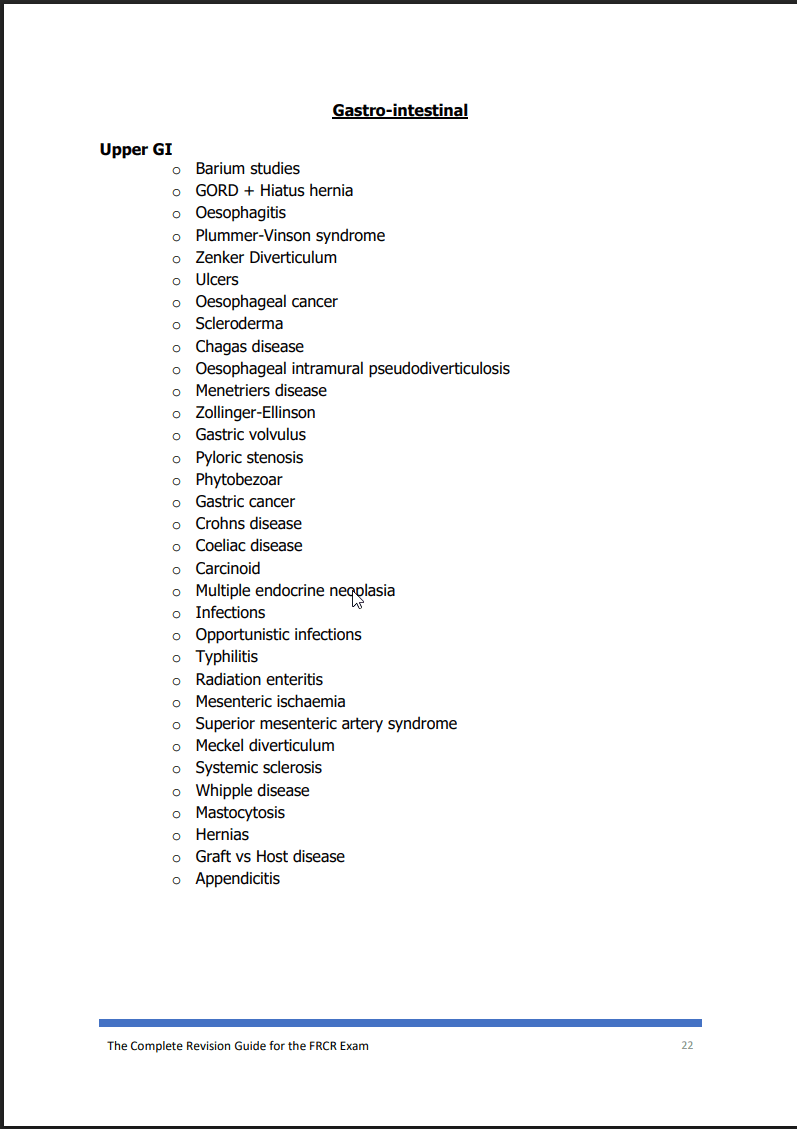
“I only missed a little bit. But I wish I'd had this on day one so I could structure my revision around it.”
What I Actually Used
There is no
perfect bank.
Every question bank has its flaws. I cast my net wide — as many questions as possible, from as many sources as possible. Here is what I used, in order.
FRCR Exam Prep
I'd use this first to understand the scope of the exam. It has a condition list broken down by system — essentially the syllabus as a checklist. I found it retrospectively and only missed a little. If I'd found it on day one, I would have structured everything around it.
Visit site →
Anki & r/medicalschoolanki
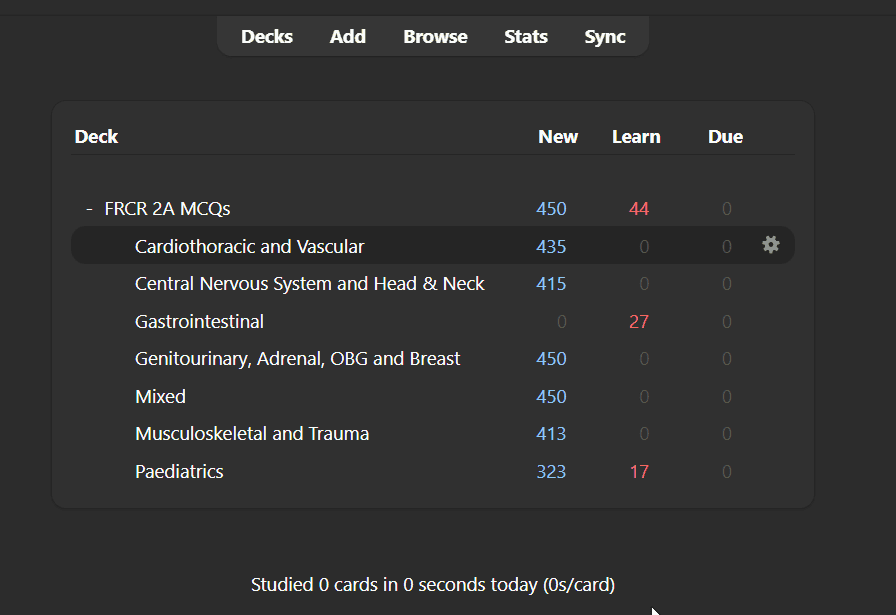
Found on Reddit: an Anki deck of ~4,000 FRCR 2A questions. The books behind it are a little dated, but it laid a brilliant foundation. It takes a long time to get through — but that time compounds. I used FSRS scheduling for maximum retention.
r/medicalschoolanki →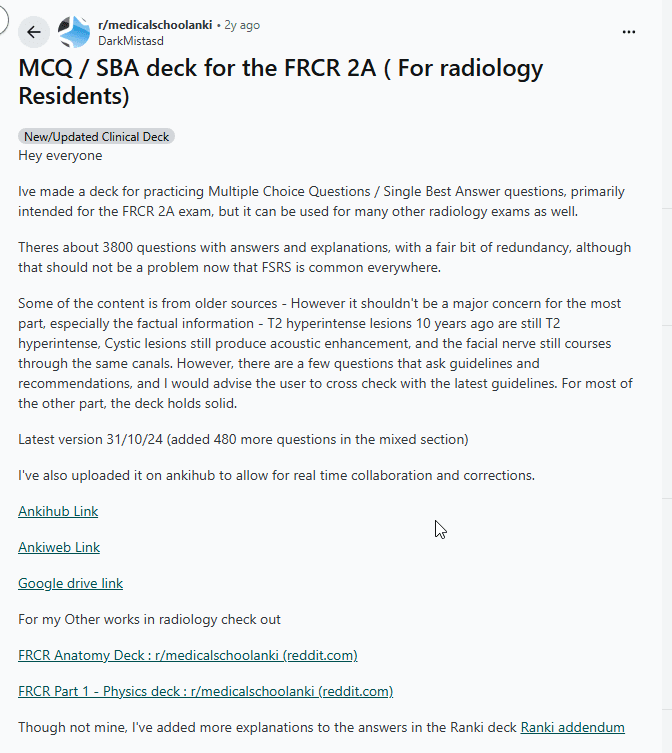
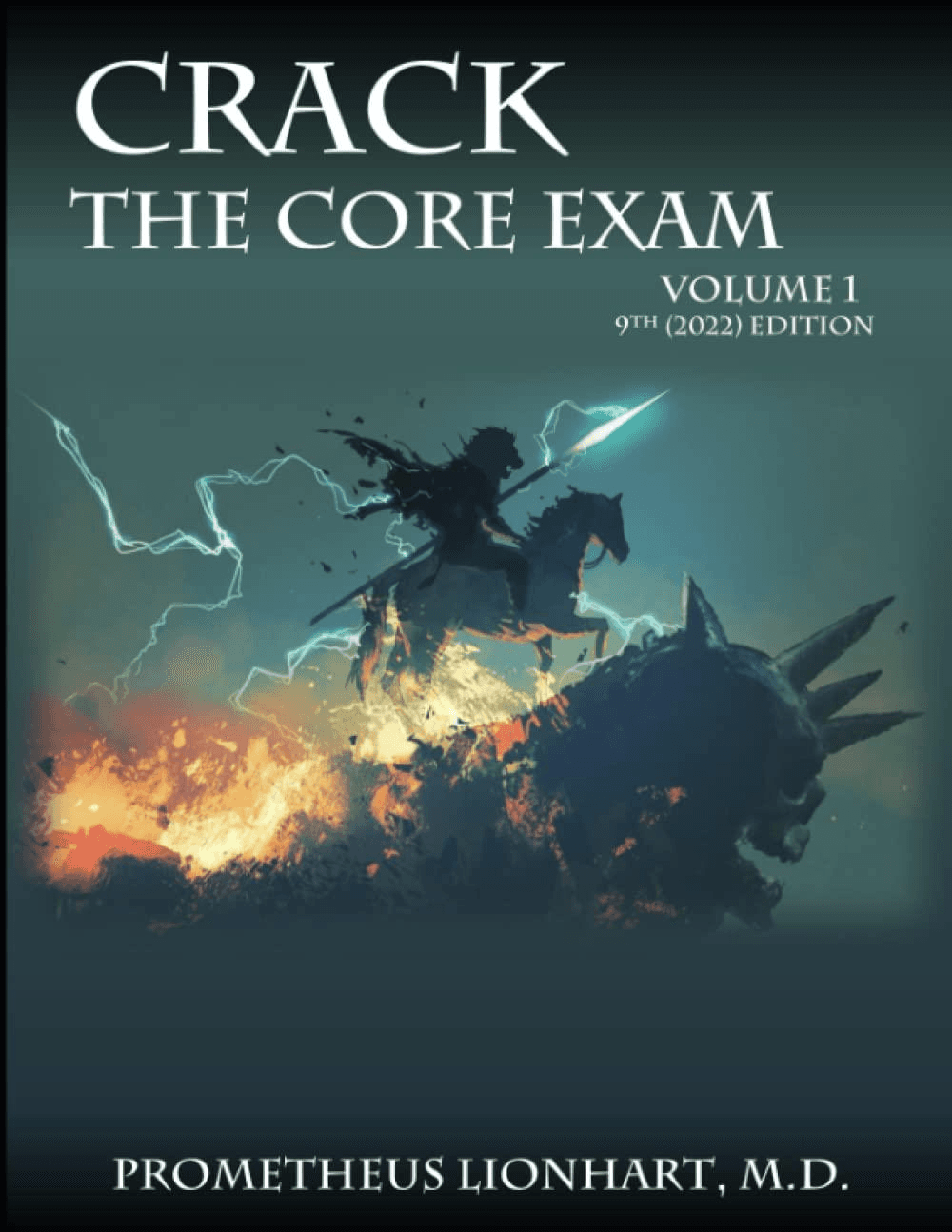
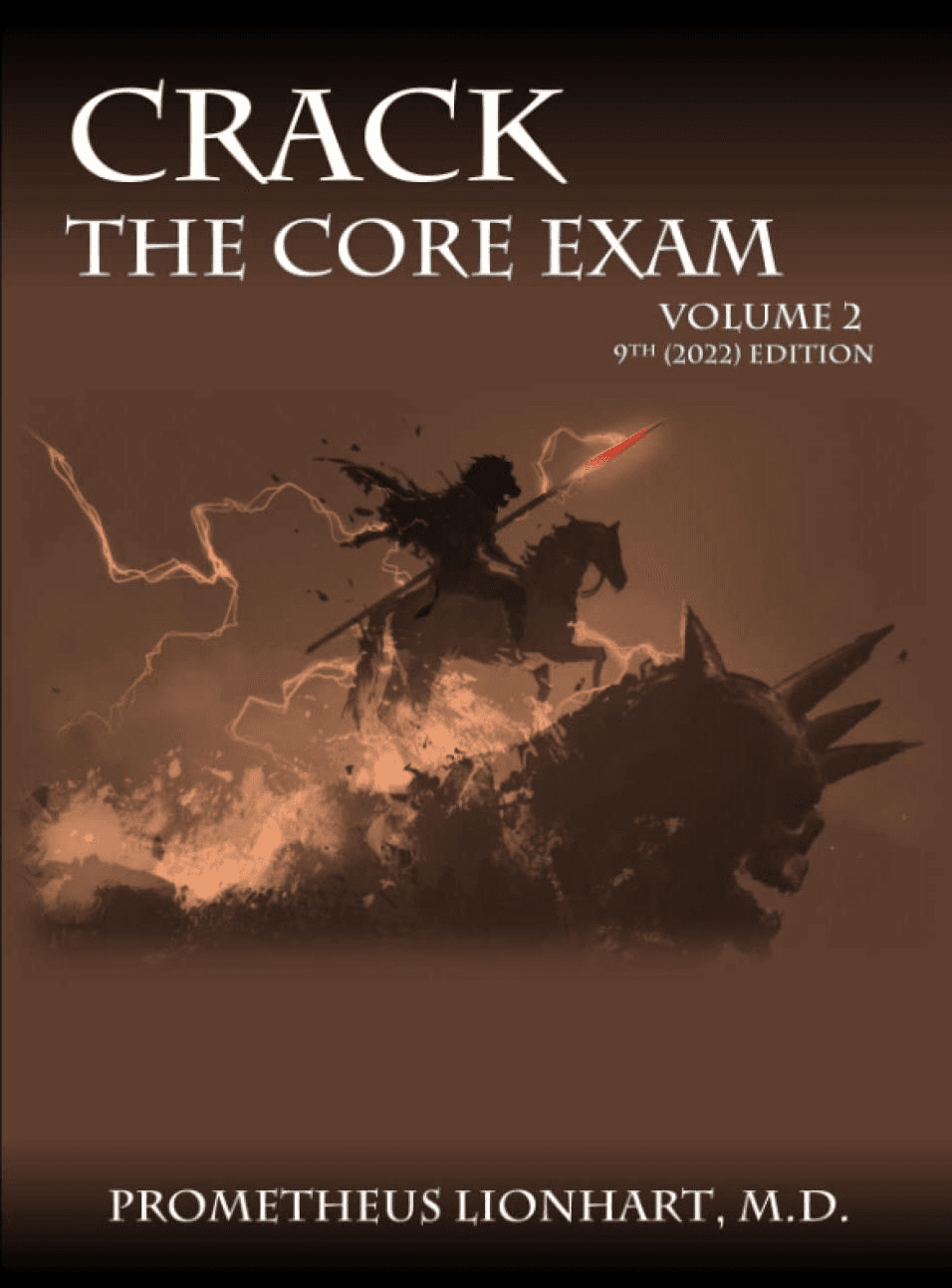
Crack the Core Exam
The undisputed Bible of the FRCR 2A. Around 95% of the exam syllabus sits within its pages. Every deanery says the same thing: candidates who knew this book inside out were the ones who passed. I only read ~40% of it — I'm a slow reader and I preferred questions — but do not underestimate it. If you can absorb this cover to cover, you are in a very strong position.
Note: MDT pathways and optimal MRI sequences are not covered — study these separately.

FRCRBank
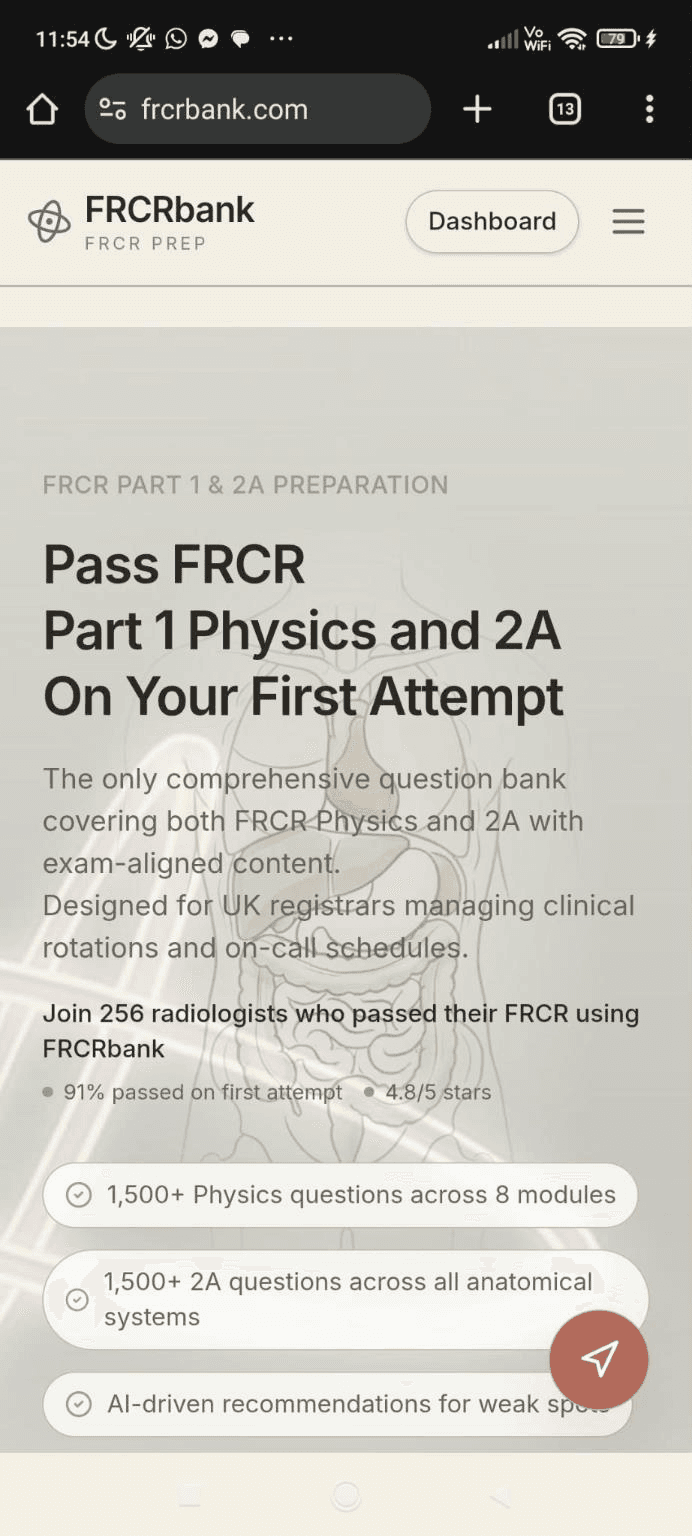
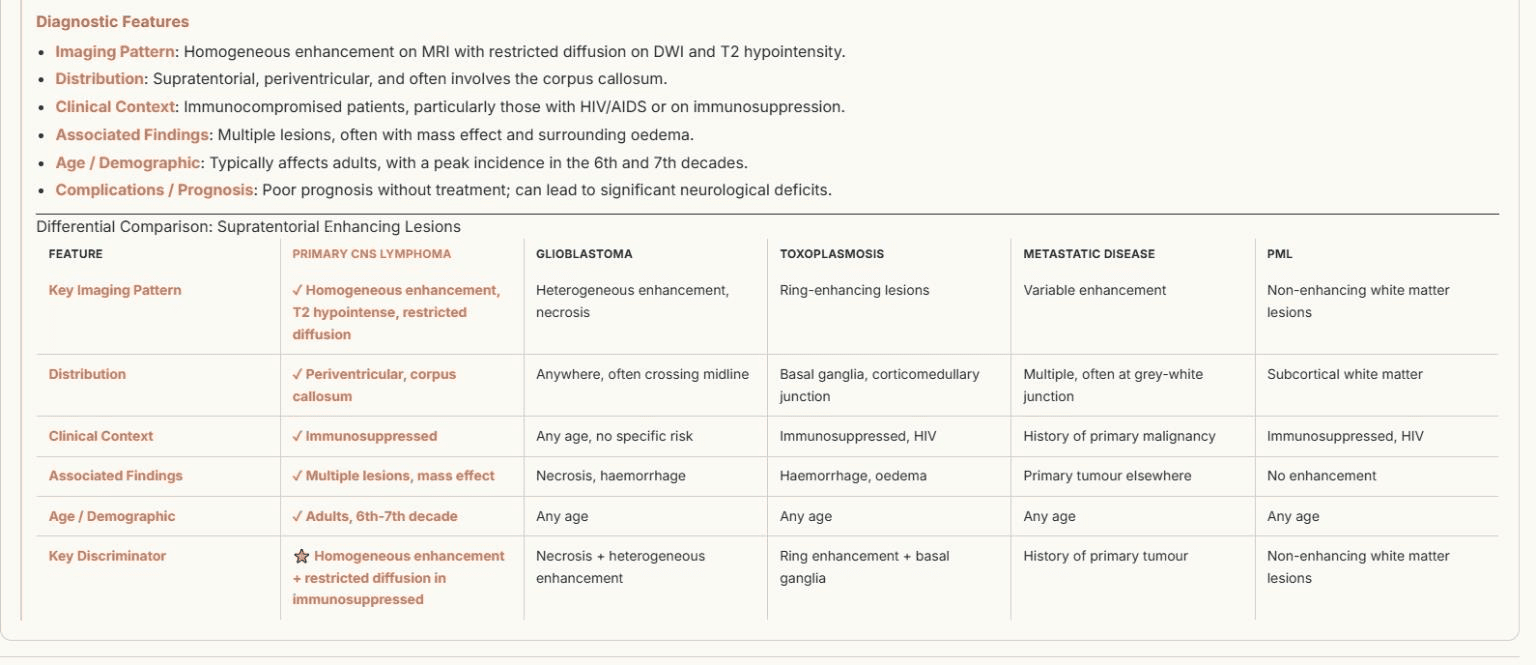
My favourite thing about FRCRBank was the tables and the structured explanations — genuinely the best I found anywhere. Every question comes with a proper breakdown that goes well beyond just the right answer. In terms of difficulty, the questions sit at about 5% below the real exam, which actually makes them ideal as a learning resource: challenging enough to stretch you, detailed enough to teach you. This is where deep understanding is built. I discovered it too late. Don't make the same mistake.
frcrbank.com →In retrospect, I wish I'd found this earlier. I might have replaced FRCR Exam Prep with this instead.
FRCRBank — The Gold Standard
Every question comes with a table like this. Press the image to zoom in and read the full breakdown.
Radwise
Pitched at the same difficulty as the real exam — probably the hardest question bank out there. I wouldn't recommend it for early revision, but it was excellent in the final weeks when I needed to test myself under proper exam conditions. If you can perform well here, you're ready.
radwise.co.uk →
Final FRCR: Self-Assessment
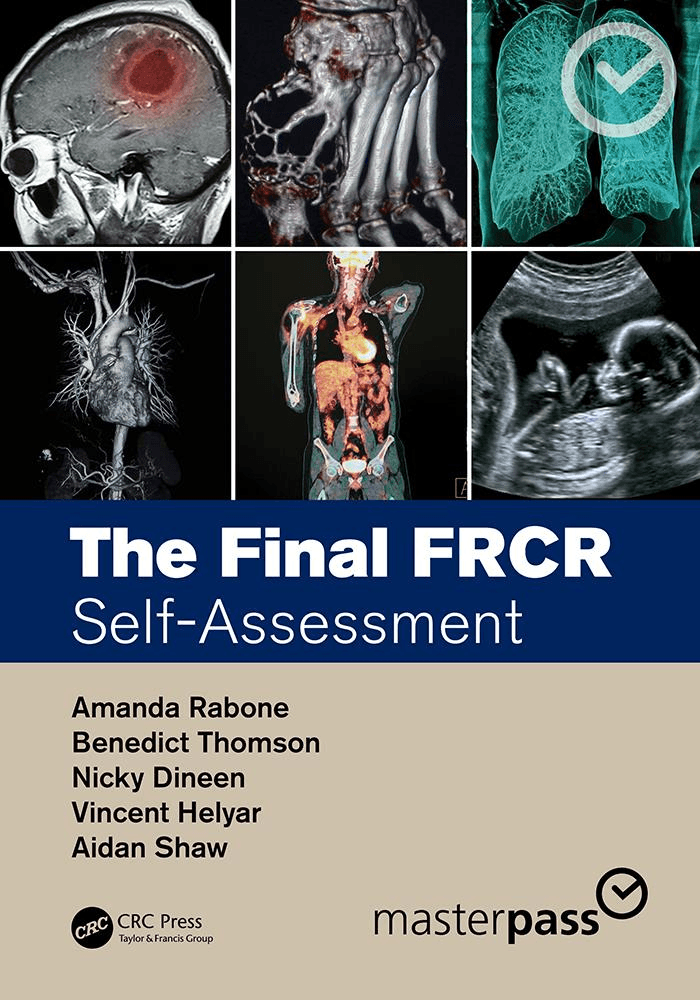
The most accurate mock paper I found. Only 4 mocks — treat each one like an exam day. I'd do one per week in the month before sitting. My actual exam score tracked this book very closely, which tells you how well-calibrated it is. Save it for last: it's the closest thing to the real paper I encountered.
Don't waste these mocks early. 4 is all you get.
Free & Additional Resources
More resources the
community swears by.
Beyond the six main resources I used, these are the most recommended across Reddit threads, Radiology Cafe, and the broader community — many completely free.
Revise Radiology
Paid — expensiveI'll be honest: I didn't use this. I looked at the price and decided it was too expensive for me personally. But I can't argue with the community — a huge number of people swear by it. 6,000 questions plus a 4-day intensive course with 4 full mock exams. If your budget allows, the consensus is to do it in the final 4–6 weeks. Widely rated as the closest question bank to the real exam.
Radiology Cafe
FreeThe best free starting point on the internet for FRCR prep. Exam overview, top tips, book reviews, and a curated resource list. If you're not sure where to begin, start here.
Radiopaedia
FreeThe standard radiology reference for imaging findings, differential diagnoses, and management guidelines. Especially strong for unusual or rare conditions you encounter in question banks.
R-ITI (e-LfH Radiology)
FreeNHS-funded e-learning platform covering all radiology subspecialties. Structured, trustworthy, and aligned with RCR curriculum. Underused by most trainees — do not underestimate it.
Books Worth Knowing
The books I actually used — split between question books for active revision and reference books for deep-dives.
Question Books
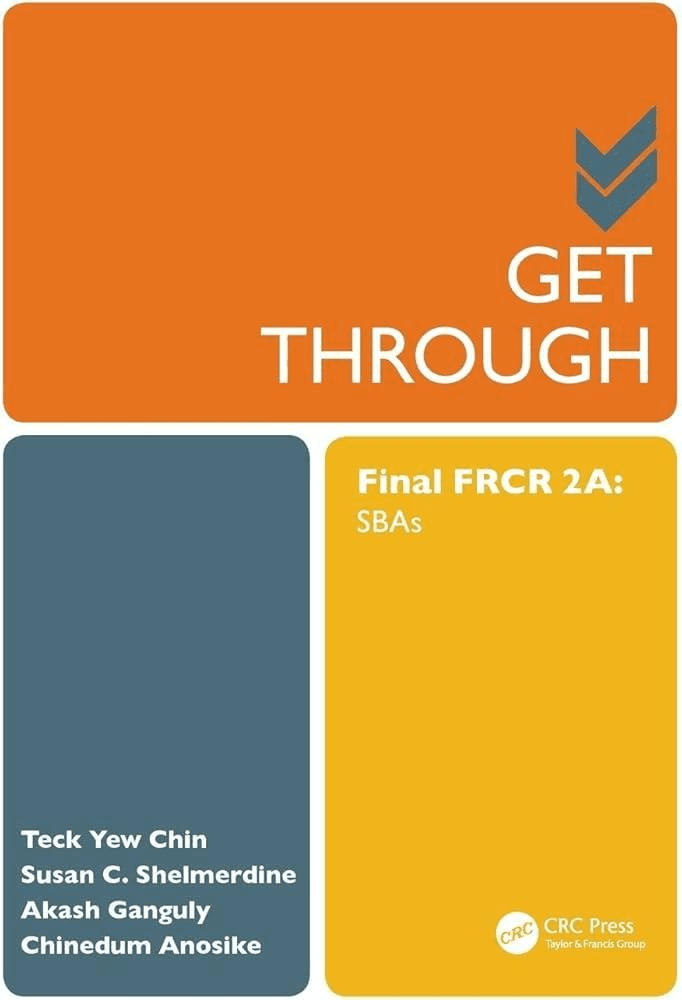
Get Through Final FRCR 2A: SBAs
Chin, Shelmerdine, Ganguly · CRC Press
120 SBA questions with detailed explanations. Good structured revision across all seven categories.
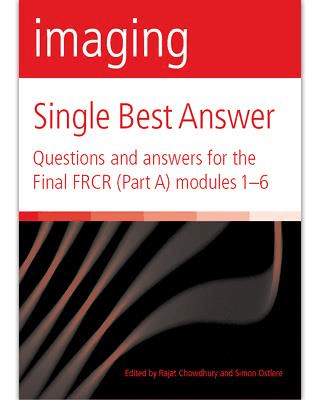
Imaging SBA Questions
BIR · British Institute of Radiology
Genuinely very hard — I was scoring in the mid-50s consistently. Stretches you beyond most question banks.
SBAs for the Final FRCR 2A
Lindsay, Gillespie · Oxford Press
Hard, wordy questions — a step up from the easier question banks. Good for stretching your precision.
Final FRCR: Self-Assessment
Rabone · MasterPass (CRC Press)
Only 4 mocks — save every one. The most accurate reflection of the real exam. My top recommendation.
Reference Books
Chapman & Nakielny's Aids to Differential Diagnosis
Organised by what you see on the image, not by diagnosis. Think like the exam does.
Fundamentals of Skeletal Radiology — Helms
The “pink book”. A brilliant introduction to MSK. Worth reading before starting 2A practice.
Radiology Review Manual — Dahnert
Comprehensive reference for deep-dives when question banks surface knowledge gaps.
From the Community
What r/RadiologyUK
actually says.
Hundreds of trainees have shared their experience on Reddit. Here are the most upvoted, most repeated pieces of advice — distilled.
“Complete every single MCQ you can get your hands on. Multiple times. Volume is the single biggest predictor of passing.”
r/doctorsUK →
“Answer EVERY question — there is no negative marking. Never leave a blank. An educated guess on a hard question is always +EV.”
r/RadiologyUK →
“Read around every incorrect answer — not just why the right answer is right, but why each wrong option is wrong.”
Radiology Cafe →
“Revise Radiology is best done 4–6 weeks before the exam — not too early. Save it for the crunch period.”
r/RadiologyUK — results megathread →
“frcr2a.com lets you do timed mock conditions — it's free and the closest thing to the real exam format I found.”
r/RadiologyUK →
“The application deadline is earlier than you think. Apply at least 2–3 weeks before it closes.”
Radiology Cafe →
“Management questions trip everyone up. Read RCR and NICE guidelines. Annotate them in your Crack the Core.”
Revise Radiology blog →
“Crack the Core is a must. If you like the humour, great. If you don't, burn it after the exam. But read it cover to cover.”
r/RadiologyUK →
Best Reddit Threads — Bookmark These
FRCR Part 2A: My personal experience and tips
r/RadiologyUK
Outline of the exam, resource reviews, and how to study — one of the most detailed pass guides on Reddit.
Clinical Radiology FRCR 2A — Advice and Support
r/doctorsUK
Unflinchingly honest about what worked and what didn't. Includes a OneDrive link with downloadable revision resources.
FRCR 2A revision resources that really helped me
r/RadiologyUK
Comprehensive resource list including frcr2a.com, Radiology Cafe, and the community's favourite question banks.
FRCR 2A — one month away, any advice?
r/RadiologyUK
Senior regs and recent passers share exactly what to do in the final four weeks. High signal-to-noise thread.
The Mental Game
It will burn.
Trust the
process.
Preparation is as much mental as it is academic. I hit walls. I felt behind. I questioned everything. This is normal — and temporary. The process works if you stick with it.

The burnout is real. Structure helps more than grinding harder.
On AI & shortcuts

I tried leaning on AI early on. It wasn't useful for actual learning — pattern recognition only comes from deliberate, repeated exposure. There's no shortcut that replaces the reps.
What helped me
Training in formal, exam-like environments from day one
Accepting that distractions will happen — and planning for them
Volume over perfection in months 1–9
Timed practice and precision only in the final two months
Using question bank analytics to find where I was actually weak
Example Cases — FRCRBank
5 cases from within
the expected scope.
These aren't the “top 5 most likely” cases — they're examples drawn from within the reasonable, expected scope of the FRCR 2A. Click a case, read the clinical stem, then flip the card.
Questions and explanation tables from FRCRBank — the structured explanation tables there are genuinely the best I found anywhere.